
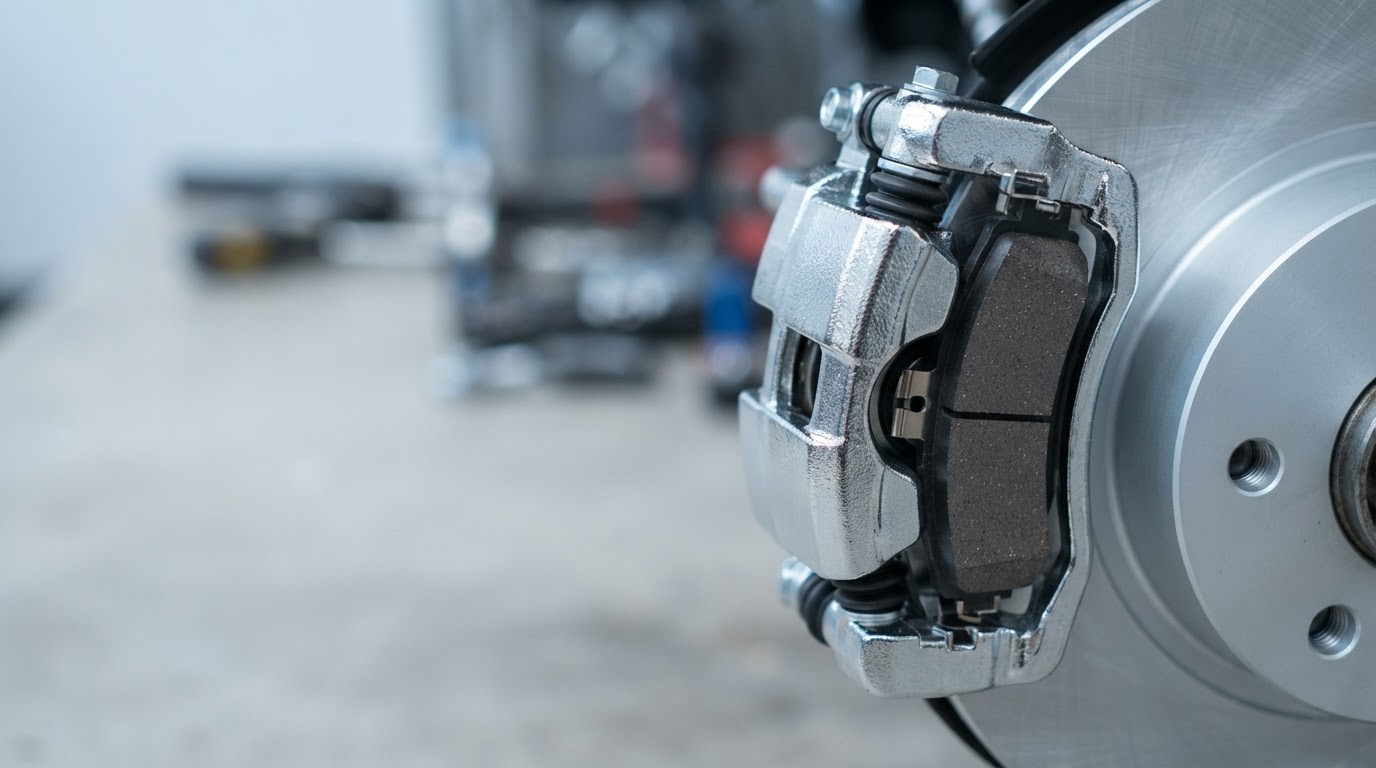
Brakes & Rotors
Gatesville Brake Service
Brakes are the one system you don't want to wonder about. We do honest brake work — pads, rotors, calipers, and fluid — and we'll tell you straight what's worn, what's fine, and what still has life in it.
Know the Signs
When to Have Your Brakes Checked
Brakes tend to send a warning before they give out. Spot any of these and it's worth getting them checked.
Squealing
A constant, high-pitched squeal as you come to a stop usually points to pads worn down to their built-in wear tabs.
Grinding
A grinding noise means metal is riding on metal — the pads are spent and the rotors are eating the damage.
Car Pulls When Braking
When the vehicle tugs or dives one direction under braking, a sticking or dragging caliper is a likely culprit.
Spongy Pedal
A pedal that drops to the floor or feels spongy may signal trapped air, a leak, or a master cylinder on its way out.
Steering Shakes on Stops
A steering wheel or pedal that shudders when you brake is often the result of rotors that have worn unevenly.
Brake Light on the Dash
A brake light that won't go off means the system is flagging a problem — don't let it slide.
What We Do
How a Brake Job Goes Here
We service the entire brake system, not just the pads. Here's what we tackle day in and day out.
Brake Pads
We swap worn pads front and rear and inspect the rest of the system while we're at it.
Rotors
We check your rotors against the maker's minimum-thickness spec and replace any that are too thin or wearing unevenly.
Calipers
We hunt for calipers that are sticking or leaking and replace the ones that won't clamp or let go as they should.
Brake Fluid
Brake fluid soaks up moisture over time. We flush the old out and fill with fresh so your pedal stays solid.
Brake Inspections
Unsure where things stand? We'll get it on the lift and walk you through exactly what we find.
How It Works
How a Brake Job Goes Here
We Inspect
We lift the vehicle and go over the pads, rotors, calipers, lines, and fluid.
Here's What We Found
We walk you through what we spot — what's worn, what's holding up, and what's getting close.
Then We Talk Choices
We lay out what can wait and what can't, in plain terms, so you know precisely where your brakes stand.
Ask Us Anything
Ask us anything. We'd rather you understand the work than simply hand over the keys.
Local Knowledge
Central Texas Is Hard on Brakes
Central Texas summers bring heat and humidity that age brake fluid and pads faster than you'd expect. Fluid pulls in moisture over time, and once it has enough water in it, your pedal goes soft and your stopping distance grows. Stop-and-go traffic around the Gatesville square wears pads down faster too, especially in the heat.
Here's what a lot of drivers miss: as of January 1, 2025, Texas dropped the yearly safety inspection for most non-commercial vehicles. That means no one is looking over your brakes anymore unless you bring it up. A worn set can creep up on you.
We suggest having your brakes looked at at least once a year, and any time your tires get rotated. Catching wear early is the surest way to avoid a small issue turning into a metal-on-metal repair.
Why The Tire House
Why Drivers around Gatesville pick us
The Waco family, here too
The same crew that runs The Tire House in Waco runs this Gatesville shop. You get the same straight talk and the same fair deal.
You sign off on the price
Nothing gets added to your ticket without your say-so and a number you agreed to. The price you hear is the price you pay.
Family-run
We're a family shop, rooted here in Coryell County. Pick up the phone and you're talking to folks who drive these same roads.
ASE-Certified Technicians
The techs who work on your car or truck at our Gatesville shop are ASE-certified, so the job is done by trained hands.
Brake FAQ
Brake Questions, Answered by Folks Who Drive These Roads
Most brake pads have a small metal tab built in as a wear indicator. When the pad gets close to its minimum, that tab touches the rotor and puts out a steady, high-pitched squeal each time you brake — your heads-up to have them looked at soon. Not every squeak is trouble, though. A bit of noise on a damp morning or from brake dust can come and go on its own. But if the squeal is constant and getting worse, bring it in and we'll take a look.
Take it seriously. Grinding usually means the pads are worn all the way down and metal is pressing right on the rotor. Every mile you drive like that gouges the rotor deeper, turning a straightforward pad job into a pad-and-rotor job. Hear grinding? Call us and bring it in as soon as you can.
A shake that only shows up under braking usually points to rotors that have worn unevenly, so the pads grab and let go as the wheel turns. A caliper that isn't releasing fully can do it too. If the wheel shakes all the time — even when you're not braking — that's more likely a balance or alignment issue than a brake problem.
If the car tugs to one side when you brake, one side is usually gripping harder. A sticking caliper, a worn brake hose, or pads that have worn unevenly side to side are common culprits. If the car drifts even when you're not braking, that's more likely an alignment or tire issue.
A soft or sinking pedal can point to air in the brake lines, a fluid leak, or worn parts somewhere in the system. Whatever the cause, your brakes aren't building full pressure. Don't keep driving on it — give us a call and we'll help you figure out the safest way to get it looked at.
Not always. Each rotor carries a manufacturer's minimum thickness stamp, and we measure yours against it. A rotor with enough thickness left and even wear can often stay. Many newer vehicles use thinner rotors, though, and those often hit their limit by the first pad change. Either way, rotors get replaced in pairs on the same axle.
Brake fluid pulls in moisture from the air over time, and water lowers the temperature at which the fluid boils. Even a small amount of water can drop that boiling point by about 100°F, which can leave you with a fading pedal when the brakes get hot. Central Texas heat and humidity speed that up. A good rule of thumb is roughly every two years, or whatever your owner's manual calls for — and it's worth having the fluid tested any time your brakes are serviced.
There's no single honest number. Pad life depends on your vehicle, the pads themselves, and how and where you drive. Stop-and-go driving wears pads faster than open highway, and heavy loads or towing wear them faster still. The simplest habit is to have your pads checked every time your tires are rotated, so you always know where they stand.
Yes. Pads and rotors get replaced in pairs on the same axle — both fronts or both rears. New parts on one side and worn parts on the other can make the car brake unevenly and pull. That doesn't mean all four wheels need work at once, though. Fronts and rears rarely wear at the same pace.
As of January 1, 2025, most non-commercial vehicles in Texas no longer need a yearly safety inspection, so nobody is looking at your brakes unless you ask. We suggest a brake check at least once a year, and any time your tires get rotated. If you notice squealing, grinding, pulling, a soft pedal, or a warning light in between, don't wait for the next check — bring it in.
They can. Highway miles on US 84 or FM 116 are fairly easy on brakes, but stop-and-go driving around town, especially in summer heat, wears pads faster. Heavy loads and towing add to it too. If you're not sure how yours are holding up, swing by and we'll measure them and tell you straight.
Got a brake question we didn't get to? Ring us at (254) 230-0360 — we're glad to walk you through it, whether or not you end up buying from us.
Stop With Confidence.
If something feels off, don't sit on it. Give us a call and we'll get your brakes checked before a small fix turns into a big one.
Serving Gatesville & Central Texas