
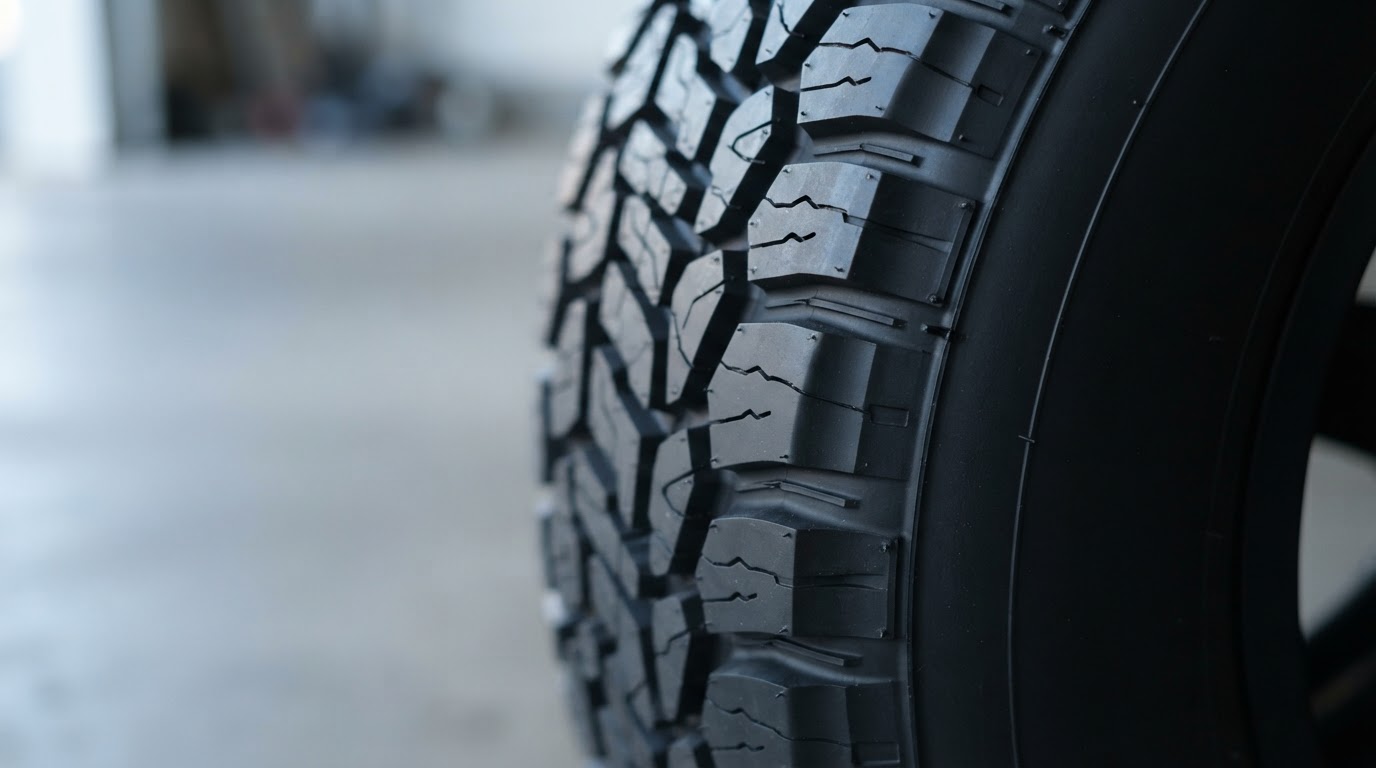
Light Truck Tires
Pickup & Light Truck Tires in Gatesville
Tires that can handle the work your truck does — job sites, caliche ranch roads, and the trailer behind you. Straight talk from a family-owned shop that serves Gatesville.
Signs It's Time
When Your Truck Needs Tires
Your truck tends to tell you when it's time. Keep an eye out for these.
Chunked or Cut Tread
Gravel, rock, and job-site debris can tear pieces out of the tread and weaken the tire.
Shallow Tread
A loaded truck already needs room to stop, and worn tread makes it worse when it rains.
Uneven Wear
Wear in the center or on the edges often means your pressure isn't matched to the load you're carrying.
Sidewall Bulges
A bubble or a gash in the sidewall compromises the tire's strength. Have it checked immediately.
Tire Types
The Tire That Matches the Work You Do
Highway
Built for pavement miles, with a quieter ride and more tread life.
All-Terrain
Grip for gravel, caliche, and job sites, with road noise you can live with.
Mud-Terrain
Rough tread built for deep mud and hard off-road use, but noisier and quicker to wear on pavement.
Heavy-Duty LT
Load Range D and E tires for heavy hauling and regular towing.
How It Works
How We Help You Pick
Describe the Job
How much your truck carries, how often you tow, and the roads it runs on.
We Match Your Size & Load
We pull up your size, load index, and load range so every option can handle your work.
Choices, Side by Side
You'll see choices across a range of price points, and we'll walk you through the tradeoffs in plain terms.
Mounted, Balanced, Checked
We mount your tires, check over your tire wear and suspension, and flag it if an alignment is warranted.
Local Know-How
Truck Tires Built for Central Texas Work
Gatesville trucks work for a living. A lot of them spend the week on job sites, caliche ranch roads, and county roads, then pull a boat or a stock trailer on the weekend.
That kind of work is hard on rubber. Sharp rock and debris can cut a sidewall, and heavy loads in summer heat push a tire to its limit. The right load range and tread are what separate a tire that holds up from one that fails on the job.
Let us know what your truck carries and where it runs, and we'll pair tires to the job — not just the size.
Why The Tire House
Why Drivers around Gatesville pick us
The Waco family, here too
The same crew that runs The Tire House in Waco runs this Gatesville shop. You get the same straight talk and the same fair deal.
You sign off on the price
Nothing gets added to your ticket without your say-so and a number you agreed to. The price you hear is the price you pay.
Family-run
We're a family shop, rooted here in Coryell County. Pick up the phone and you're talking to folks who drive these same roads.
ASE-Certified Technicians
The techs who work on your car or truck at our Gatesville shop are ASE-certified, so the job is done by trained hands.
Light Truck Tire FAQ
LT Tire FAQs
Load range is a letter rating that tells you how rugged an LT tire is and how much air it can safely hold to support its rated load. In most common sizes, Load Range C matches an old 6-ply build and caps at 50 psi, Load Range D is 8-ply at 65 psi, and Load Range E is 10-ply at 80 psi. Some wider sizes run lower pressures. Your replacements should meet or exceed the load range the truck left the factory with.
Not necessarily. Plenty of half-tons roll off the lot with passenger tires, which are built for a softer ride and better mileage. Load Range E rubber is stiffer and heavier, so it rides stiffer and can ding your fuel economy a bit. They earn their keep if you haul heavy or tow often. Three-quarter and one-ton trucks typically come with LT tires, and those should be swapped for LT tires of at least the same load range.
No. ST tires are trailer-only rubber, with rigid sidewalls meant to carry weight in a straight line — not to handle the steering, braking, and traction a truck demands. Most top out at 65 mph. On your trailer, run the type and load rating the trailer manufacturer calls for, and on your truck, stick with passenger or LT rubber.
Only if you're regularly slogging through deep mud or rough off-road trails. Mud-terrain tires use big, wide-set tread blocks that shed mud well, but they're loud on the highway, chew through tread quicker, and burn more fuel. For job sites, gravel, and caliche roads around Gatesville, a solid all-terrain usually delivers the grip you need with less racket and longer tread life.
Larger tires affect more than looks. Your speedometer and odometer will read low, since each rotation of a taller tire covers more ground. The added mass drags on acceleration, stretches out your braking, and cuts fuel economy, and the tires need clearance to turn and flex without rubbing. A leveling kit throws off your alignment too, so plan on one afterward. Check with us before you buy, and we'll help you pick a size that fits and still carries your load.
No. That sidewall figure is the most the tire can safely hold, not what your truck actually needs. Running it that high all the time — particularly with an empty bed — beats up the ride, wears the center of the tread, and cuts your grip. Run the pressure on your door sticker, and check your owner's manual if it calls for more air for heavy hauling or towing.
Yes. The pair on each side of a dually's rear axle splits the load, so they need to be the same size and close in tread depth. If one sits taller or has more tread than its mate, it shoulders more than its fair share of the weight and can run hot or wear out early. Holding both at the right pressure is just as important.
Load range and a rugged enough sidewall are the two things that matter most. Towing puts extra strain on every tire, and county roads with caliche and gravel can shred a softer tread. If you're hauling feed, livestock, or gear to the ranch on weekends, a Load Range D or E all-terrain is usually the right call. Tell us what you pull and where, and we'll fit the tire to the job.
Unsure what your truck needs? Ring us at (254) 230-0360 — we're glad to walk you through it, whether or not you end up buying from us.
Put the Right Tires on Your Truck
Ring us with your truck's year, make, and model, and tell us what it hauls. We'll help you sort the options — no pressure.
Serving Gatesville & Central Texas